
10K vs 14K vs 18K vs 24K Gold: Differences, Price, Durability & Best Uses
10K vs 14K vs 18K vs 24K Gold: Gold karat measures purity on a 24-point scale, where 24K represents nearly pure gold (99.9%+). Lower karats blend pure gold with alloys (copper, silver, zinc, nickel) to increase hardness, alter color, and reduce cost. Higher karat means greater purity, richer yellow hue, higher value, but softer metal prone to scratches and deformation.
This in-depth comparison explores purity percentages, current pricing (as of January 20, 2026), durability for daily wear, visual differences, ideal applications for jewelry versus investment, and practical buyer advice. With gold spot prices hovering around $4,730–$4,750 per troy ounce (~$152–$153 per gram for pure 24K), understanding karats helps maximize value in today’s elevated market.
What Does “Karat” Actually Mean?
Karat (K) divides gold into 24 parts: 24K = 24/24 pure gold. Lower karats indicate alloy percentage:
- 10K = 10/24 = 41.7% pure gold
- 14K = 14/24 = 58.3% pure gold
- 18K = 18/24 = 75% pure gold
- 24K = 24/24 = 99.9%+ pure gold
Alloys harden gold (pure gold scratches like butter) and enable colors like white (nickel/silver/palladium) or rose (copper). In the US, items ≥10K must bear purity stamps (karat or fineness: 417, 585, 750, 999). International standards vary slightly, but 9K (37.5%) appears in some markets for budget pieces.
Higher purity delivers deeper, warmer yellow tones as alloys dilute less; lower karats appear paler or brassier.

Gold Karat Comparison Table (2026 Pricing Estimates)
|
Karat |
Purity (% Gold) |
Fineness |
Durability (Scratch Resistance) |
Color Depth |
Approx. Intrinsic Value (% of 24K) |
Approx. Retail Price per Gram (Jan 2026) |
Best For |
|
10K |
41.7% |
417 |
Excellent (hardest) |
Pale yellow |
~42% |
$65–$75 |
Everyday, active lifestyles, budget |
|
14K |
58.3% |
585 |
Very Good |
Warm classic |
~58% |
$90–$100 |
Engagement rings, daily wear (most popular) |
|
18K |
75% |
750 |
Good (softer) |
Rich, deep yellow |
~75% |
$115–$125 |
Luxury, fine jewelry, sensitive skin |
|
24K |
99.9%+ |
999 |
Poor (very soft) |
Intense orange-yellow |
100% |
$152–$155 |
Investment bullion, coins, collectibles |
Pricing notes: Based on spot $4,730–$4,750/oz ($152–$153/gram pure). Retail adds 50–200% markup for craftsmanship, brand, design. Scrap/resale closer to spot minus fees. Prices fluctuate daily—check live sources.
In-Depth Breakdown: 10K Gold
Composition — 41.7% gold + 58.3% alloys (often copper/zinc for strength).
Appearance — Light, pale yellow; less “precious” look due to high alloy content.
Pros
- Superior hardness — resists scratches, dents, bending best.
- Most affordable real gold option.
- Ideal for high-wear scenarios (work, sports, kids).
- Holds shape long-term.
Cons
- Muted color; may feel less luxurious.
- Higher alloy risk of tarnish or skin reaction (especially nickel).
- Lower intrinsic value/resale.
Typical price — Lowest; great entry-level luxury.
Best uses — Chain necklaces, stud earrings, signet rings, children’s jewelry, active-lifestyle pieces. Learn more about 10K Gold
14K Gold: The All-Around Favorite
Composition — 58.3% gold + 41.7% alloys.
Appearance — Balanced warm yellow; versatile for yellow, white, rose variants.
Pros
- Excellent durability-purity balance.
- Dominant US choice (~90% of engagement/wedding rings).
- Strong scratch resistance for daily wear.
- Good value retention.
Cons
- Not as rich/deep as 18K+.
- Slightly more wear than 10K over decades.
Typical price — Mid-tier sweet spot.
Best uses — Engagement rings, wedding bands, bracelets, pendants—perfect everyday luxury. Learn more about 14K Gold.
18K Gold: Luxury & Rich Color
Composition — 75% gold + 25% alloys.
Appearance — Deep, vibrant yellow; premium aesthetic.
Pros
- Luxurious look and feel.
- Higher gold content = better value appreciation.
- Often hypoallergenic (fewer reactive alloys).
- Preferred in Europe/Asia for fine jewelry.
Cons
- Softer — more prone to scratches, dents.
- Requires careful wear/maintenance.
- Higher upfront cost.
Typical price — Premium reflecting purity.
Best uses — Statement necklaces, designer earrings, high-end rings, occasional/special pieces. Learn more about 18K Gold.
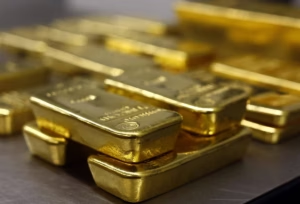
24K Gold: Pure Investment Metal
Composition — Virtually 100% gold.
Appearance — Bright, intense yellow-orange hue.
Pros
- Maximum purity/value.
- No alloy reactions (excellent for sensitive skin).
- Tracks spot price closest.
- Cultural significance (e.g., Asian markets).
Cons
- Extremely soft — scratches, bends, deforms easily.
- Impractical for wearable jewelry.
- Not stamped for rings/bands in many places.
Typical price — Highest, near spot.
Best uses — Bullion bars, coins (e.g., American Eagle, Canadian Maple), investment holdings, heirloom ingots. Learn more about 24K Gold.
Price Comparison & Market Factors (January 2026)
Spot gold ~$4,730–$4,750/oz reflects geopolitical tensions, inflation hedging, central bank buying. Retail jewelry multiplies this via labor, design, brand.
Approximate per-gram breakdown (intrinsic + typical markup):
- 10K: $65–$75
- 14K: $90–$100
- 18K: $115–$125
- 24K: $152–$155 (bullion near spot)
Why prices scale non-linearly — Higher karat = exponentially more gold content at elevated spot levels. A 5g 18K ring holds ~3.75g pure gold vs ~2.9g in 14K—significant at $152/gram.
Scrap vs retail — Scrap pays ~85–95% spot minus fees; retail 2–3x for finished pieces.
Influencing factors — Dollar strength, Fed policy, trade tensions, demand from India/China.
Durability & Wearability Comparison
Durability decreases with purity:
- Scratch resistance — 10K (highest) > 14K > 18K > 24K (lowest).
- Daily wear — 10K/14K suit active lives; 18K careful/occasional; 24K avoid.
- Bending/deformation — Lower karats resist; 24K malleable.
- Allergies — Higher karats (18K/24K) better; avoid nickel in white gold (opt rhodium-plated or palladium).
Polish regularly; store separately to minimize wear.
Color & Appearance Differences
Alloy percentage affects tone:
- 10K: Pale, brass-like.
- 14K: Classic warm yellow.
- 18K: Rich, saturated.
- 24K: Vibrant, almost orange.
White/rose gold — karat influences base; higher karat richer under plating.
Style trends — 14K classic US; 18K luxury; 24K bold/cultural.
Jewelry vs Investment: Which Karat Wins?
Jewelry — 14K dominates for balance (durability + value). 18K for luxury feel. 10K for budget/high-wear. Avoid 24K wearables.
Investment — 24K bullion/coins purest, easiest resale, tracks spot best. Minimal premium over spot.
Wealth preservation favors 24K; practical jewelry favors 14K/18K.
How to Choose the Right Karat in 2026
Decision framework:
- Budget — 10K/14K affordable; 18K premium.
- Lifestyle — Active/daily = 10K/14K; occasional = 18K.
- Aesthetics — Rich color = 18K; classic = 14K.
- Investment — Pure holdings = 24K.
- Allergies/Skin — Higher karat or nickel-free.
- Cultural/Regional — 22K/24K popular in Asia; 14K US standard.
Test pieces, verify hallmarks, buy certified.
How to Identify Authentic Karat Gold
- Hallmarks — Inside band: “10K”, “14K”, “585”, “750”, “999”.
- Testing — Acid test, electronic analyzer, XRF (professional).
- Red flags — No stamp, too cheap, magnetic (fake alloys).
Always purchase from reputable dealers.
FAQs about 10K vs 14K vs 18K vs 24K Gold
Which karat is best overall?
14K — best balance for most jewelry buyers.
Is 10K real gold?
Yes — legally stamped gold (41.7% pure).
Why avoid 24K for jewelry?
Too soft; impractical for wear.
18K vs 14K — which is better?
18K richer color/value; 14K more durable/affordable.
Which holds value best?
24K — closest to spot price.
Can lower karat gold tarnish?
Yes — alloys may react; higher karats resist better.
Gold remains a timeless asset in 2026’s volatile economy. Whether for sentimental jewelry or portfolio protection, match karat to your needs. Contact us today to Buy Gold in Africa.