

Gold Price Per Gram in Uganda Today | Latest 24K, 22K Prices & Buying Guide 2026
The gold price per gram in Uganda today stands as a critical indicator for investors, jewelers, and everyday buyers navigating the volatile precious metals market.
As of the latest market data, the current gold price per gram in UGX for 24K gold is approximately UGX 527,000, reflecting real-time fluctuations influenced by global spot prices and local currency exchange rates.
This translates to a gold price per gram in USD of around $152, providing a benchmark for international comparisons amid ongoing economic shifts.
These figures are derived from live spot gold prices, which are primarily quoted in U.S. dollars per troy ounce on international exchanges like the London Bullion Market Association (LBMA), and then converted using the prevailing USD to UGX exchange rate, currently hovering around 3,484 UGX per USD.
Prices are calculated by starting with the global spot price per ounce (typically around $4,750 USD as of now), dividing by 31.1035 to get the per-gram value in USD, and multiplying by the USD/UGX rate to arrive at the local UGX figure.
Additional factors such as local taxes, import duties, and dealer premiums can add 1-5% to the final retail price, making it essential for buyers in Kampala or other regions to shop around for the best deals.
This methodology ensures transparency but also highlights how external events, like U.S. Federal Reserve policies or geopolitical tensions, ripple through to affect Ugandan buyers.
For instance, a stronger USD often pushes up local prices, while increased global demand for safe-haven assets can drive them even higher.
To break it down further, here’s a detailed table of current prices across common karats, based on the spot rate for pure 24K gold adjusted for purity levels:
| Karat | Price per Gram (UGX) |
|---|---|
| 24K | UGX 527,000 |
| 22K | UGX 483,000 |
| 18K | UGX 395,000 |
| 14K | UGX 308,000 |
These values are approximate and can vary slightly by dealer, but they underscore the premium placed on higher purity levels. Last Updated: January 20, 2026, 02:56 PM EAT.
Always verify with licensed sources for the most accurate gold price per gram in Uganda today, as markets update continuously.

Gold Prices by Karat in Uganda
Understanding gold prices by karat in Uganda is vital for making informed decisions, whether you’re investing in bullion or purchasing jewelry.
The karat system measures gold’s purity, with 24K being 99.9% pure gold and lower karats incorporating alloys like copper or silver for added durability.
This directly impacts pricing, as higher karats command premium rates due to their greater gold content, but they may not suit all uses.
For example, 24K gold is soft and prone to scratches, making it ideal for investment bars but less practical for everyday wear.
In contrast, 22K (91.7% pure) balances purity with strength, while 18K (75% pure) offers even more resilience at a lower cost, and 14K (58.3% pure) is the most durable but least valuable per gram.
Ugandan buyers often prefer 22K or 18K for jewelry due to cultural traditions in wedding bands and ornaments, where affordability and longevity matter, whereas investors lean toward 24K for its resale value.
When deciding the best karat for investment vs jewelry, consider your goals: 24K or 22K excels for long-term holdings as they retain more intrinsic value and hedge against inflation, but 18K or 14K is better for jewelry that withstands daily use without significant wear.
In Uganda, where gold serves both as adornment and wealth preservation, 22K is a popular middle ground, offering high purity without the fragility of 24K.
24K Gold Price Per Gram in Uganda
The 24K gold price per gram in Uganda is currently around UGX 527,000, representing pure gold without alloys.
This karat is favored by serious investors for its direct tie to global spot prices, making it a reliable store of value amid economic uncertainties like rising inflation or currency fluctuations.
22K Gold Price Per Gram in Uganda
At approximately UGX 483,000 per gram, the 22K gold price per gram in Uganda appeals to those seeking high purity with enhanced durability.
It’s commonly used in traditional Ugandan jewelry, where buyers appreciate its rich color and resistance to tarnishing, blending cultural significance with practical investment potential.
18K Gold Price Per Gram in Uganda
The 18K gold price per gram in Uganda sits at about UGX 395,000, making it a cost-effective choice for fashionable pieces.
With more alloys, it’s harder and suits modern jewelry designs, popular among younger Ugandans who prioritize style over maximum purity.
14K Gold Price Per Gram in Uganda
Priced around UGX 308,000 per gram, 14K gold is the most affordable and robust option, ideal for budget-conscious buyers or high-wear items like rings.
While it has less gold content, its longevity makes it a smart pick for everyday use in Uganda’s active lifestyle.

Gold Price Trends in Uganda (Past 10 Years)
Over the past decade, gold price trends in Uganda have shown remarkable growth, mirroring global surges while influenced by local dynamics.
From 2016 to 2026, the average annual price per gram in UGX has risen from around 150,000 to over 527,000, a staggering increase driven by international factors like geopolitical tensions and central bank buying.
In Uganda, this upward trajectory accelerated post-2020, with prices climbing over 200% amid the COVID-19 pandemic and subsequent inflation spikes.
Key peaks include a record high in 2025, when exports hit $5.8 billion, fueled by soaring global demand.
Why is the gold price rising? Globally, safe-haven buying during economic uncertainty, such as U.S.-China trade wars and Middle East conflicts, has boosted demand.
Locally, Uganda’s expanding role as a gold hub—processing ore from DRC and South Sudan—has increased supply but also tied prices to export booms.
Conversely, brief dips occurred in stable periods, like 2018-2019, when stronger USD/UGX rates tempered gains.
Uganda-specific factors include rising mining output in regions like Busia and Karamoja, which stabilized local supply, but challenges like illicit trade and environmental regulations have occasionally caused volatility.
Inflation in Uganda, averaging 5-7% annually, has further propelled gold as a hedge, while government policies promoting formalization have attracted foreign investment, pushing prices higher.
For gold investment in Uganda, this trend suggests strong long-term potential, especially with discoveries valued at trillions.
📈 Here’s a visual representation of the gold price trend in Uganda over the past 10 years:
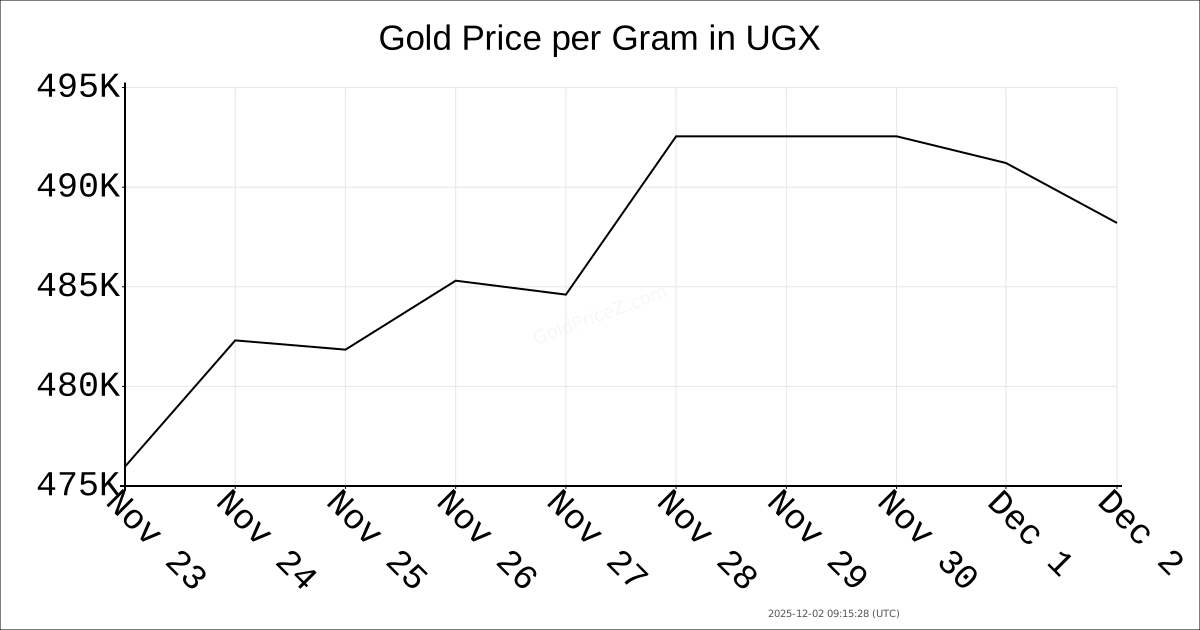
This chart illustrates steady climbs, with notable accelerations in 2022-2026, underscoring opportunities for savvy investors.
Factors Affecting Gold Prices in Uganda
Several interconnected elements shape gold prices in Uganda, blending global influences with domestic realities.
The global gold market sets the baseline, where supply-demand imbalances from major producers like China and Australia drive spot prices upward during shortages or high jewelry/tech demand.
In Uganda, this translates to immediate impacts, as local prices track LBMA benchmarks closely.
The USD vs UGX exchange rate is another pivotal factor; a weakening shilling (as seen in recent years, fluctuating around 3,500-3,700 UGX/USD) makes imported gold costlier, inflating per-gram rates.
When the USD strengthens, Ugandan buyers face higher costs, often leading to 5-10% annual price hikes.
Inflation in Uganda, hovering at 3-5% lately, erodes purchasing power, prompting investors to flock to gold as a hedge, which in turn bids up prices.
Domestic mining output plays a role too—Uganda’s artisanal sector, producing over 90% of gold, has surged with new discoveries in Karamoja and Busia, but inefficiencies and smuggling can disrupt supply, causing volatility.
Government policies and taxes, including export levies and the 2022 mining reforms, add layers; higher royalties (up to 5%) on exports can trickle down to retail prices, while incentives for local refining aim to stabilize them.
Environmental regulations and geopolitical ties, like sanctions on neighboring DRC gold, further complicate the mix, often leading to premium pricing for ethically sourced metal.

Is Gold a Good Investment in Uganda?
When evaluating if gold is a good investment in Uganda, consider its proven track record as a stable asset in a country prone to economic fluctuations.
Gold has historically outperformed inflation, with prices tripling over the last decade, offering a reliable way to preserve wealth without the hype of quick riches.
It’s generally safe, backed by Uganda’s growing mining sector and global demand, but risks like price volatility from international markets exist—always diversify to mitigate them.
Comparing gold vs land vs fixed deposits, gold shines for liquidity; you can sell quickly without the hassles of land transactions, which involve high legal fees and appreciation tied to location (e.g., Kampala plots yielding 10-15% annually but illiquid).
Fixed deposits offer steady 8-12% returns from banks like Stanbic, but they lag behind gold’s potential 15-20% in bullish years and don’t hedge inflation as effectively.
Land provides tangible security and rental income, but gold requires no maintenance and is portable.
For short-term vs long-term investment, gold suits long-term horizons (5+ years) as a hedge against shilling depreciation, while short-term plays risk market dips.
In Uganda, where land values can stagnate in rural areas, gold’s global appeal makes it a balanced choice—start small, consult experts, and view it as part of a broader portfolio for sustainable growth.
Where to Buy Gold in Uganda
Finding reputable spots for where to buy gold in Uganda ensures authenticity and fair pricing in a market ripe with opportunities.
Licensed gold dealers, such as 24K Gold Bars Africa, offer certified bullion and nuggets, often with export-ready documentation for international buyers.
These entities comply with Ministry of Energy regulations, providing assayed gold at competitive rates tied to daily spot prices.
Jewelry shops in Kampala, like those on Buganda Road or in major malls, cater to ornamental needs with 18K-22K pieces, blending cultural designs with investment value—ideal for first-time buyers seeking wearable assets.
Online gold platforms, though emerging, include trusted sites 24K Gold Bars Africa., allowing remote purchases with secure delivery, but verify their Mineral Dealer’s License via the Uganda Mining Cadastre portal.
Before buying, check for:
- Hallmarks or certificates proving purity (e.g., 99.9% for bars).
- Dealer licenses from the Directorate of Geological Survey and Mines.
- Transparent pricing without hidden fees.
- Return policies and third-party assays to avoid counterfeits.
This due diligence protects your investment in Uganda’s thriving gold scene.

Where to Sell Gold in Uganda
Knowing where to sell gold in Uganda maximizes returns while minimizing risks in a dynamic market.
Best places include licensed dealers like Atlas Gold Uganda or Mubende Gold Mines in Kampala, which offer competitive buyback rates based on live spot prices, often 1-2% below market for quick transactions.
Jewelry shops and refineries, such as NRS Logistics Limited, also buy scrap or old pieces, valuing them by weight and karat after on-site testing.
Pricing works via assays determining purity (e.g., 24K fetches top dollar), with deductions for impurities—expect 95-98% of spot value from reputable buyers.
Gold buyers in Kampala, like those on Buganda Road, provide instant cash but compare quotes to avoid lowballs.
To avoid scams:
- Deal only with licensed entities (check MDL numbers).
- Insist on digital scales and acid tests.
- Steer clear of unsolicited street buyers promising above-market rates.
This approach ensures safe, profitable sales.
Gold Mining in Uganda & Its Impact on Prices
Gold mining in Uganda has transformed the economy, with major regions like Busia in the east, Mubende in central Uganda, and Karamoja (including Amudat and Moroto) leading production through artisanal and emerging large-scale operations.
These areas host over 90% of output, with the recent Wagagai Gold Mine in Busia marking Uganda’s first industrial-scale project, processing 5,000 tonnes daily.
Export demand, surging 76% to $5.8 billion in 2025, has stabilized local prices by increasing supply, but illicit flows from DRC inflate volumes without benefiting miners.
Uganda’s role in Africa’s gold market as a refining hub enhances its influence, keeping prices competitive yet volatile due to mercury use and environmental concerns impacting long-term sustainability.
Why Buy Gold in Uganda with 24K Gold Bars Africa
If you’re considering purchasing gold in Uganda — whether for investment, wealth preservation, jewelry, or resale — choosing the right supplier is one of the most important decisions you will make.
Here’s why many buyers and investors choose 24K Gold Bars Africa:
1. Certified & Authentic 24K Gold (99.99% Pure)
24K Gold Bars Africa specializes in high-purity, certified gold bars and bullion that come with authenticity documentation, including assay certificates verifying 99.99% purity.
This gives buyers confidence that the gold meets international standards and holds real intrinsic value.
2. Ethical & Transparent Sourcing Across Africa
We sources our gold directly from licensed miners and certified refineries across Africa, including Uganda, Tanzania, Ghana, and the Democratic Republic of Congo.
This direct sourcing helps eliminate middle-men markups and promotes ethical trade practices.
3. Competitive Pricing & Fair Market Rates
By working closer to the source and avoiding large markups, 24K Gold Bars Africa can offer competitive prices on 24K bullion compared with many international markets — especially for buyers looking to get value for money in Uganda’s growing gold economy.
4. Full Service — From Assay to Delivery
Buying gold internationally can be complicated, but this company provides end-to-end support, including:
-
Quality testing and assay certification
-
Export documentation and compliance
-
Secure, insured shipping locally and overseas
This comprehensive service helps both first-time buyers and experienced investors navigate logistics with less stress.
5. Global Reach with Local Support
Whether you’re in Uganda, elsewhere in Africa, or overseas, they facilitate delivery to your location through reliable, insured logistics and offer support through the entire buying process.
This makes investing in African gold more accessible and convenient.
6. Trusted Brand with International Clientele
With a history of selling to clients globally — from the USA to Europe and the Middle East — 24K Gold Bars Africa has built a reputation among international investors and collectors, enhancing credibility and buyer confidence.
7. Ideal for Investors & Collectors Alike
Whether you want to diversify your portfolio, hedge against inflation, or store tangible wealth, investing in certified 24K gold bullion through a reputable dealer gives both liquidity and long-term stability, unlike purely speculative financial instruments.
Important Safety Note
While 24K Gold Bars Africa positions itself as a reputable dealer, always do your own due diligence:
-
Request original assay reports and proof of certificates
-
Verify company registration and physical office
-
Avoid deals that seem too good to be true
-
Use traceable, insured payment methods
Gold markets — including in Uganda — have risks with unverified sellers, fake listings, or informal offers that don’t deliver gold as promised, so verification is essential before transacting at scale.
FAQs About Gold Price Per Gram in Uganda
Navigating gold price per gram in Uganda raises common questions—here’s clarity on key ones.
How much is 1 gram of gold in Uganda today?
Currently, 24K gold is about UGX 527,000 per gram, varying by karat and dealer. Check live rates for precision.
Is gold cheaper in Uganda than Kenya?
Yes, often by 5-10%; Uganda’s price is ~UGX 527,000/gram (~$152 USD), while Kenya’s is ~KES 19,373/gram (~$150 USD, but adjusted for taxes, Uganda edges out).
Does gold price change daily?
Absolutely, due to global markets, exchange rates, and local supply—expect 1-3% shifts from events like Fed announcements.
How to test real gold in Uganda?
Use acid kits, density tests, or professional assays at licensed dealers; hallmarks and magnets (gold isn’t magnetic) help spot fakes.
These insights aid smart decisions in Uganda’s gold landscape.
Final Thoughts & Call to Action
In summary, gold remains a cornerstone for wealth preservation in Uganda, with rising prices and mining growth signaling robust potential.
Bookmark this page for ongoing updates on gold price per gram in Uganda. For personalized advice or transactions, contact licensed dealers today—whether buying for investment or selling inherited pieces, act now to secure your financial future.

